A welcoming first impression
Rustic Entryway Ideas That Make Room for Real Life
Create a welcoming rustic entryway with practical storage, warm wood, layered textures, and a few personal accents—even in a small space.
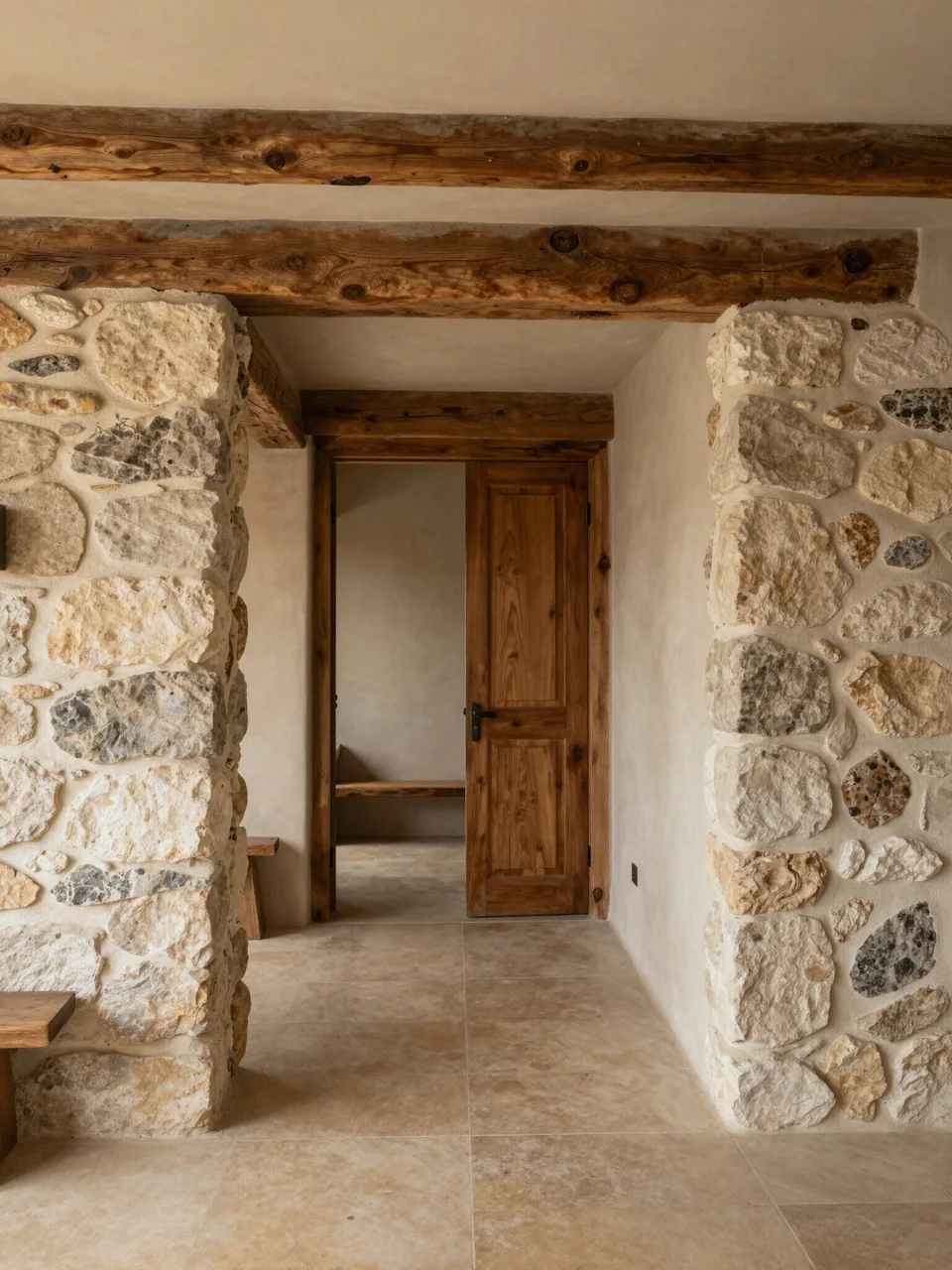
A welcoming entryway begins with what comes through the door every day. Keys, shoes, bags, mail, and a dog leash need somewhere practical to land. Give those things a place first, then add the wood, woven texture, and personal details that make a rustic entrance feel like home.
Start with the daily routine
Notice what happens when someone arrives with full hands. Where do the keys land? Which shoes are used most often? Does mail collect on the nearest chair? Make a short list of the problems you actually want the entryway to solve.
For example, a household that needs a place for two daily bags may benefit more from suitable hooks than another decorative tray. A small dish works for keys only if it is easy to reach on the way in and out. Let those habits shape the arrangement.
Measure the route as well as the wall
Measure the wall, the door swing, and the path people take through the space. A console can fit against a wall and still make the entrance awkward when the door opens or someone carries groceries inside.
In a narrow hall, try a shallow shelf or a smaller piece you already own before committing to deeper furniture. If you want a bench, test whether someone can sit and put on shoes without blocking the route. Consider nearby cupboard doors and access to switches as well.
Repeat a few materials, then add contrast
Warm wood, a woven basket, and dark metal make a useful starting palette. Repeat a wood tone or metal finish to connect the pieces, while allowing their shapes and surfaces to vary. Everything does not have to match.
A worn-looking frame can sit above a cleaner-lined console when their colors relate. Keep some surfaces simple so the weathered pieces have room to stand out. Adding a distressed finish to every object can make the room feel busier than intended.
Give every storage piece a job
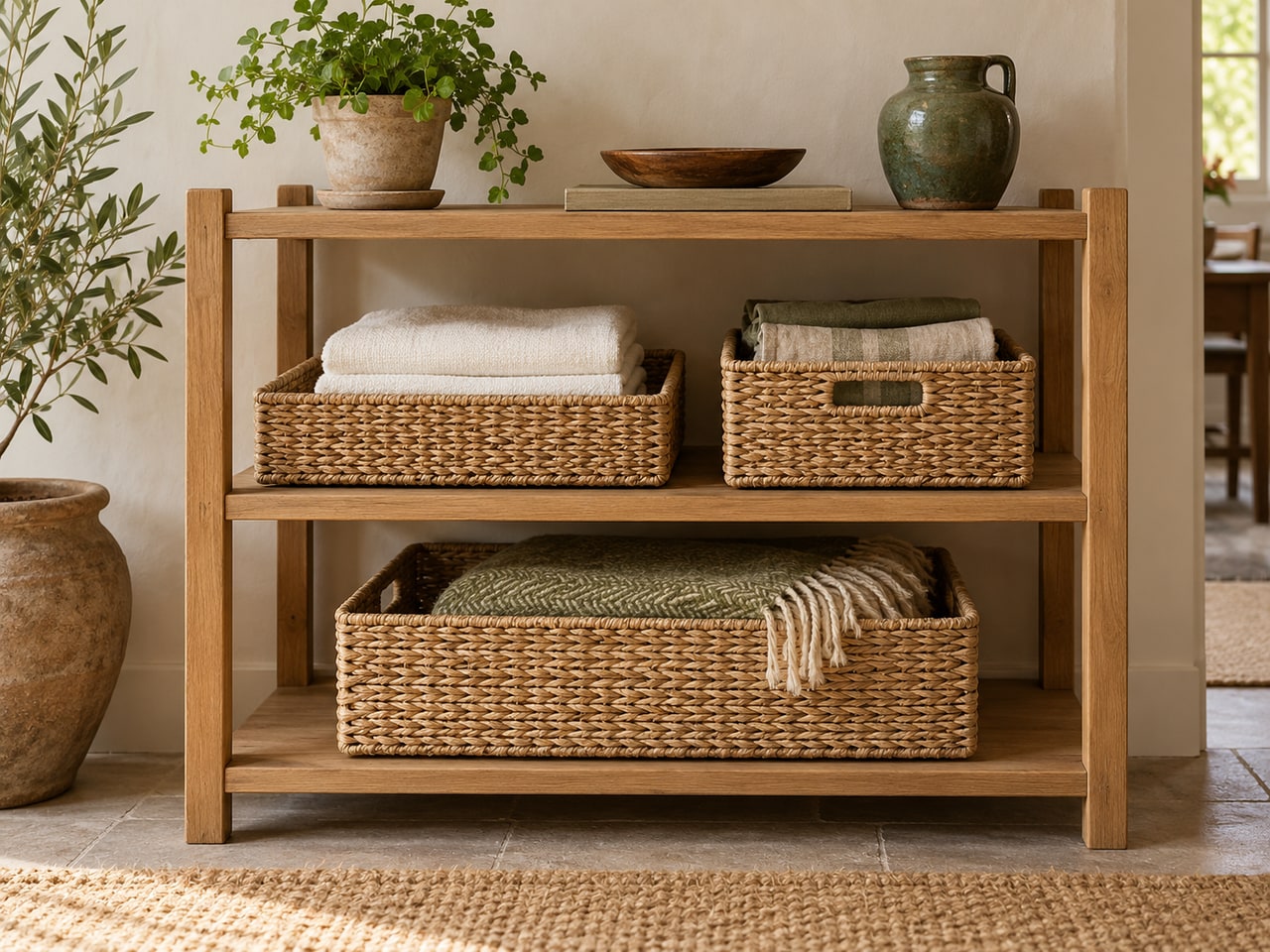
Choose a dish for keys, a defined place for incoming mail, and a basket for an actual daily need. Measure a shelf opening before choosing its basket. Check whether the basket is easy to remove when it contains the things you intend to keep there.
A tray is useful only if it is emptied, and a row of hooks helps only if the household can reach and use it. Follow manufacturers’ instructions for mounting hooks, shelves, and furniture, with fittings suitable for the wall and intended load.
Choose one personal focal point
A horse print, a landscape, or a vintage-inspired mirror can establish the mood. Test its finished outline on the wall before choosing a size. Let smaller accents support it rather than compete with it.
Try a small lamp and one vessel before adding more objects. If you use stems or greenery, choose a scale that allows the door to open and keeps the route clear. A useful entryway should feel welcoming with the lights on in the evening as well as in a styled photograph.
Use the arrangement before buying again
Try the setup for a week. Notice where shoes gather, whether the mail tray fills, and which hooks people actually use. Move the storage before adding another decoration if the same problem keeps returning.
Keep the pieces that make daily life easier. You can bring in seasonal color through one familiar display area, or rotate a favorite print without changing the whole entrance. Rustic character feels most convincing when the room works comfortably for the people who live there.
A little pause before you finish
Before you call it finished
- The door opens fully and the normal walking route stays clear.
- Keys, daily shoes, and bags have practical places.
- Storage dimensions have been checked against the available space.
- Mounting and furniture-stability instructions have been considered.
- One personal focal point leads the room without competing clutter.
These are decorating ideas, with illustrative room concepts. This guide contains no paid retailer links. Read our editorial approach.
Back to all journal guides