The collected kitchen
Mixing Vintage-Inspired Accents into a Farmhouse Kitchen
Add vintage-inspired character to a farmhouse kitchen with a restrained palette, useful accents, thoughtful displays, and uncluttered worktops.
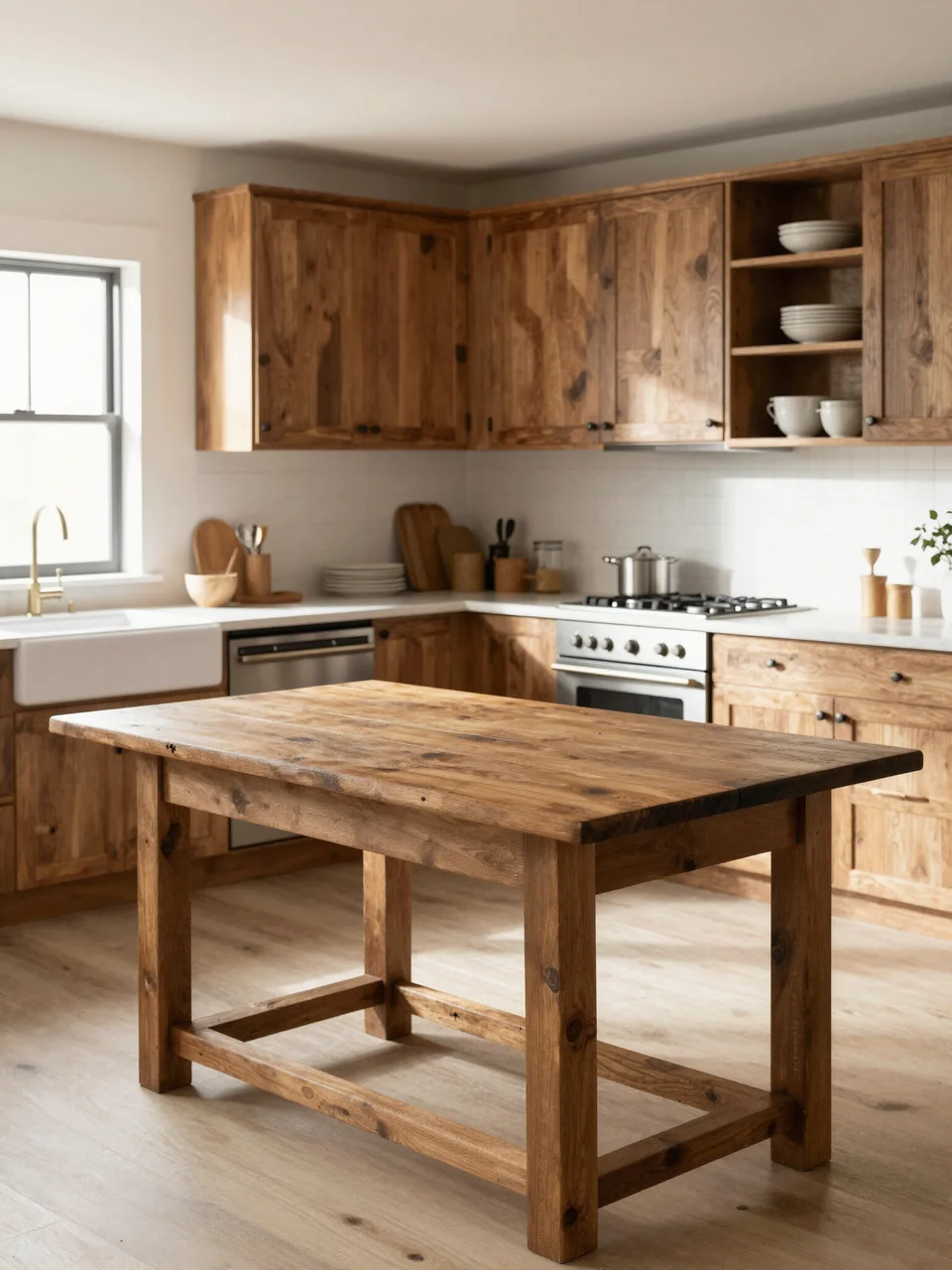
A farmhouse kitchen feels collected when its pieces have different shapes and textures but a shared sense of purpose. A worn-looking frame, a simple pitcher, and a useful basket can bring that character into the room without taking over the worktops. Start with the kitchen you already have, then make one small area feel more personal.
Choose one place to begin
Pick a shelf, the end of a counter, or a wall near the breakfast table. Keep the places where you chop, wash, and cook available for those jobs. A small, deliberate arrangement often feels calmer than ornaments scattered across every surface.
Try this before shopping: clear one shelf, clean it, and put back only the objects you use or enjoy seeing. Notice the empty space as well as the objects. If the shelf already feels welcoming, you may only need to move something you own.
Let the existing room set the palette
Look at the cabinet finish, worktop, floor, and any fabric already in the room. Choose a few colors from that setting rather than asking every new accent to make a separate statement. Cream, warm wood, and muted green are one possible combination; your kitchen may suggest something else.
Repeat a color in different materials. An ivory towel and a cream pottery vessel can feel related without matching exactly. A darker frame can connect to an existing handle or light fitting. Variation in texture keeps a restrained palette from feeling flat.
Mix shapes with a reason
For a starting arrangement, try one upright shape, one softer texture, and one useful object. A framed botanical print, a woven basket, and a pitcher illustrate the idea. Adjust their scale to the shelf rather than buying a particular set.
Keep the arrangement easy to understand. Let the print be the focal point, give the basket an actual storage job, and leave space around the pitcher. If the group feels busy, remove an object before adding another. Vintage-inspired describes a style; it does not mean that a piece is an antique.
Give everyday objects the best places
A washable towel, an attractive utensil holder, or a basket that fits its shelf can contribute more than another ornament. Measure the available space and think about how often you reach for the item. A vessel that blocks a socket or makes a cupboard awkward to open has not earned its place.
Choose a display location that is easy to wipe down. Move objects out of the way of cooking splashes and follow appliance and accessory manufacturers’ clearance instructions. Fabric, woven storage, and decorative greenery need particular care around heat.
Separate display pieces from food-use pieces
An old-looking bowl or pitcher is not automatically suitable for serving food. Use decorative or uncertain pieces for display unless their intended use, materials, and condition are established. For everyday food contact, follow the manufacturer’s guidance.
The same distinction applies to boards, baskets, and containers. Something that photographs beautifully can still be the wrong choice for food storage or preparation. Keep its decorative role clear, and choose working kitchen tools for their stated purpose.
Refresh the arrangement before replacing it
Try moving a picture from another room, folding a familiar towel differently, or swapping the contents of a basket. A seasonal change can be as small as one stem or one color repeated in the same display area.
Live with the arrangement for a few days. If it is easy to clean, leaves the worktop useful, and makes you happy when you walk in, it is doing its job. Add another piece only when you know what is missing.
A little pause before you finish
Before you call it finished
- One display area has a clear focal point.
- Colors connect with the cabinets, worktops, or fabrics already present.
- Everyday items remain easy to reach and put away.
- Decorative pieces are kept separate from food-use items unless suitability is established.
- Heat clearances and cleaning access have been considered.
These are decorating ideas, with illustrative room concepts. This guide contains no paid retailer links. Read our editorial approach.
Back to all journal guides